
Read the symptom before choosing a system
Dampness on a basement wall can be condensation, a leaking window well, a cracked wall or groundwater pushing through the slab joint. The fix for each is different.
A simple test is to tape a square of plastic sheeting to the wall for two days. Moisture under the plastic comes from outside, while droplets on the surface come from room air.
Interior drain, exterior membrane or grading fix
Most homes do best with a mix. Fix the surface first, then add interior control if water persists.
| Approach | What it does | Limits | Who does it |
|---|---|---|---|
| Interior drain channel and sump | Catches water at the footing and pumps it out | Does not stop water entering the wall | We handle the plumbing |
| Exterior excavation and membrane | Seals the outside wall and adds a footing drain | Costly, disrupts landscaping | A foundation contractor, unless dispatch confirms |
| Grading and downspout work | Moves roof and yard water away | Cannot fix a rising water table | Often a homeowner or landscaper |
| Crack injection | Seals a single crack | Does not fix drainage | A foundation or concrete specialist |
| Window well drains | Keeps well water off the glass and wall | Needs a clear outlet | Often us with the sump system |
We will not sell you an interior system if a downspout is dumping at the wall.
Five checks before you spend money
Walk the outside of the house first.
- Downspouts empty several feet from the foundation, not at the wall.
- Soil near the house slopes away and has not settled into a trough.
- Window wells are clear of leaves and have a working drain.
- Sprinklers do not spray against the foundation.
- Hose bibs and the clothes washer hoses are not leaking inside the wall.
If all five pass and water still shows up, it is time to look at drainage under the slab.
What the city says about grading
Herriman requires every property to manage drainage on its own lot or send it to the street or a recorded easement. The city cites IRC R401.3, which calls for the grade to fall at least 6 inches within the first 10 feet away from the foundation, or a 5 percent slope where something blocks that distance.
Hard surfaces such as patios and walkways within 10 feet need at least a 2 percent slope away from the house. Measure yours with a level and a tape. A bubble that says the patio tilts toward the wall explains a lot of wet basements.
Water showing up downstairs? Call (385) 488-1892 to book a look.
Call (385) 488-1892How an interior system gets installed
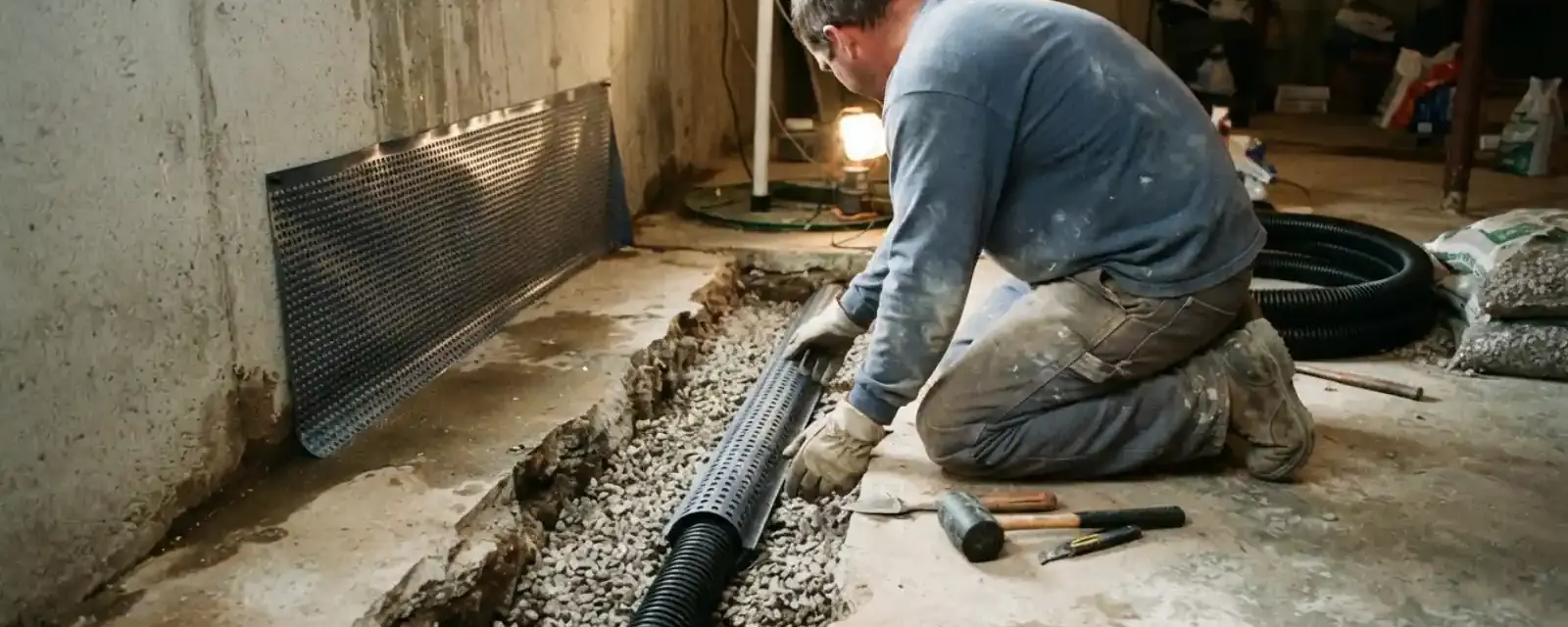
A typical job follows this order.
Mark and cut
A concrete saw opens a strip along the wall, a foot or so wide.
Dig and lay the channel
A perforated drain pipe sits in washed gravel, sloped toward the sump.
Set the sump basin
A sealed pit collects the flow, and a pump moves it out. See our sump pump installation page.
Run the discharge
The line leaves the home to a spot approved by the building department.
Patch and test
New concrete goes over the channel, and we fill the system with water to confirm it flows.
Adding new plumbing lines can require a city permit. Confirm the route before digging.
Herriman soils, water and your slab
The Utah Geological Survey mapped shallow groundwater, collapsible soils and expansive soils in the Copperton quadrangle, which covers north Herriman and neighboring towns. It does not say the same for the whole city, so a house on a hill may behave very differently from one in a flat area.
Expansive soils swell when wet and can crack foundations, while collapsible soils settle when wetted. Both reasons favor keeping irrigation off the foundation edge.
Herriman has required a geotechnical report on every footing excavation since October 2006 because soils vary around the city. If you have the report for your lot, it is the best document to show a contractor.
Radon is a separate concern. The geologic survey notes it enters through small foundation cracks and utility pipes, so a sealed sump lid is part of a good job. Test with a kit, since one in three Utah homes has high radon readings according to the state.
What we do not do
We do not do structural foundation repair, wall bracing, helical piers or exterior excavation unless dispatch confirms a specific job. If your wall bows inward or a crack is wider than a pencil, call a structural engineer first, then come back to us for the drainage.
What drives waterproofing costs
You get a clear price before work starts. These factors move it.
- Length of wallInterior drain is priced by linear foot along the walls that leak.
- Finished wallsDrywall and flooring must come out along the wall first.
- Pump and backupA single pump costs less than a pump with battery backup.
- Discharge distanceA long buried line adds trenching and a permit check.
- Surface fixes firstGutters and grading can cut the scope of the interior work.
Gradual seepage and groundwater are usually not covered by a standard homeowner policy. A burst supply pipe that floods a basement often is, so ask your insurer which one you have.
Want your real number? Call (385) 488-1892 and describe where the water shows up.
Related plumbing questions
Floor water that smells like sewage points to a backed-up line, so ask about sewer line cleaning. A wet wall with no storm in sight may be a supply leak, which our leak detection team can trace. For a basement bathroom plan, see plumbing installation.
Questions before you waterproof
Can you waterproof my basement from the outside?
Not by default. Exterior excavation and membrane work is a foundation contractor's job, and we only take it if dispatch confirms a specific job.
Do you fix foundation cracks?
We do not repair structural cracks. We handle the drainage and sump work, and we can refer you to the right trade.
Does every Herriman basement need a sump pump?
No. Many stay dry with good grading and gutters. A sump makes sense when water appears at the slab edge after storms.
What is the grading rule for the area around a house?
The city cites IRC R401.3, with a fall of at least 6 inches in the first 10 feet from the foundation. Check with the building department for your lot.
Will an interior drain stop dampness in the wall?
It controls water at the floor but does not seal the wall. Mild wall dampness can remain.
Do I need a permit for a drain and sump?
Adding new plumbing lines can require one, while repair of existing systems does not. Ask the Herriman building department for your job.
How do I know if the water is groundwater or a plumbing leak?
Shut off the main water valve and watch the area for a day. If the dampness continues, groundwater is likely.
Not sure what you have? Call (385) 488-1892 and describe it.
Call (385) 488-1892Sources and standards
The standards and local rules behind this service page are listed below. Rules and fees change, so read the current version before you rely on them.