
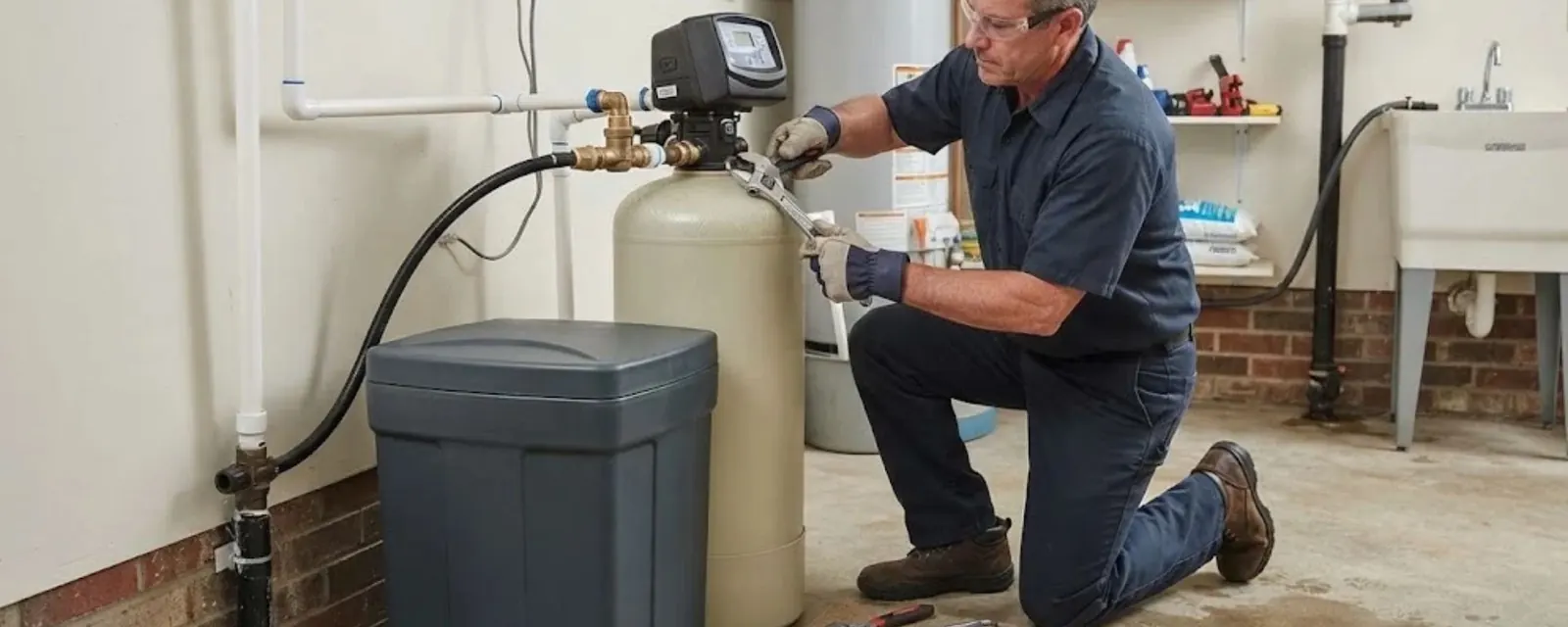
The numbers behind Herriman's hard water
The city says local wells usually run between 25 and 60 grains per gallon, while water from the Jordan Valley Water Conservancy District runs 10 to 12. On the city's own scale, anything above 10 counts as very hard. A softener sized for 12 grains is working far below capacity if the tap pulls well water at 40.
Because the supply blends, your hardness moves with the season. The city switches to the district's winter source in mid-October and brings wells back as demand rises in spring. That means the water you tested in August may not match what comes out in January.
Practical advice, then, is to test twice, once in winter and once in summer, and set the softener for the harder reading. The city also suggests checking your softener settings with the change of season.
Salt softener, salt-free conditioner or filter
Many homes end up with a softener for the whole house and a small reverse osmosis unit in the kitchen.
| Device | What it does | What it does not do | Fits |
|---|---|---|---|
| Salt-based ion exchange softener | Removes calcium and magnesium by swapping them for sodium or potassium | Does not filter taste or chlorine | Very hard water and scale protection |
| Salt-free conditioner | Changes how scale crystals form so they stick less | Does not lower hardness readings | Light scale control with no salt or drain |
| Whole-house carbon filter | Reduces chlorine taste and odor | Does not soften | Taste and smell complaints |
| Sediment filter | Catches sand and rust flakes | Does not soften | Cloudy water or older lines |
| Under-sink reverse osmosis | Treats drinking water at one tap | Does not protect water heaters or showers | Drinking and cooking water |
A salt-free unit is not a softener, and we will not call it one.
Salt versus salt-free, honestly
An ion exchange softener is the only common device that measurably reduces hardness. Resin beads hold sodium, trade it for calcium and magnesium as water passes, and then flush clean with brine during regeneration.
Salt-free conditioners do not remove minerals. They may cut scale buildup in some cases, but they leave the hardness number where it was and will not give you the slick feel or spot-free dishes. With well water near 40 grains, we usually steer buyers toward a real softener.
Sizing your system
Capacity comes from arithmetic, not guesswork.
Get a hardness reading
Use a test kit or ask your water utility. Write down the grains per gallon.
Count daily gallons
Estimate about 75 gallons per person per day, which gives 300 for a family of four.
Multiply
300 gallons times 12 grains is 3,600 grains per day. At 40 grains it is 12,000 per day.
Choose a regeneration plan
A 32,000 grain unit regenerating every week works for the first case, and the second wants a larger tank or more frequent cycles.
Check iron
Iron in the water uses up resin capacity, so tell us if you see orange stains.
These figures are general mechanics. Your tap result and your family's habits set the real numbers.
Ready to fix the scale problem? Call (385) 488-1892 to plan the install.
Call (385) 488-1892What a proper install includes
Cheap installs often skip the details below.
- A bypass valve so you can isolate the unit for service.
- Unions or quick-connects on the inlet and outlet for easy removal.
- A drain line with an air gap, so wastewater cannot siphon back into the softener or the potable supply.
- A drain route to a proper standpipe or floor drain, as plumbing code requires.
- A separate cold hose bib circuit left unsoftened for lawn use where plumbed.
- Working room around the unit so the resin tank and brine tank can be serviced.
Adding new plumbing lines can require a city permit. Ask the Herriman building department before you plan the drain route.
Backflow and the air gap
A softener drain must never connect directly to the sewer line. An open air gap keeps backflow from carrying brine or wastewater into the equipment. Herriman City reminds residents that hose bibs need vacuum breakers, and the same logic applies to anything connected to potable water.
Secondary water is not your softener's job
Some Herriman areas have secondary irrigation water. The city says it is untreated and not for human consumption, so a softener should only see the culinary supply. If your hose bibs are on secondary, do not tie them into the treated loop.
Water softening also protects tank water heaters. Scale on elements and tank bottoms cuts efficiency, so a softener often ties directly to water heater replacement timing and to tankless units that clog quickly with hardness.
What shapes the price
You get a clear price before work starts. These factors move it.
- System sizeTank capacity and resin volume follow your hardness and household size.
- Salt-free or salt-basedSalt units need a drain and an electrical outlet, while conditioners do not.
- Plumbing changesDistance from the water heater and drain access affects pipe and labor.
- Add-onsCarbon filters, sediment filters and reverse osmosis each add parts.
- Permit and drainNew lines may need a permit, and a missing drain adds work.
Softeners and filters are upgrades, so insurance rarely pays for them. A sudden leak from a failed fitting may be covered, but ask your insurer.
Want your real number? Call (385) 488-1892 and give us your test result.
Related work
If you are already replacing fixtures, ask about plumbing installation while the lines are open. A softener that leaks at its fittings can also be traced with leak detection before it floods the utility room.
Softener questions before you buy
How hard is Herriman water?
The city says its wells run 25 to 60 grains per gallon and Jordan Valley water 10 to 12, which it calls very hard. Test your tap to see where you land.
Does the water change during the year?
Yes. The city moves to the Jordan Valley winter source in mid-October and brings wells back in spring, so hardness shifts. Check your softener setting each season.
Do I need a permit for a water softener?
Adding new plumbing lines can require a permit, while maintenance of existing plumbing does not. Ask the Herriman building department about your install.
Is a salt-free system as good as a softener?
No, not at removing hardness. It changes scale behavior but does not lower the number, and we will say so.
Will a softener make my water taste salty?
A properly set softener adds only a small amount of sodium. Many people install reverse osmosis at the kitchen tap for drinking.
How often should the softener be serviced?
Refill salt, clean the brine tank and check the settings each season. Resin lasts many years in clean water.
Should the softener feed my outdoor faucets?
Usually not. Lawn water does not need softening, and it wastes salt.
Have your test result? Call (385) 488-1892 and we will size it.
Call (385) 488-1892Sources and standards
The standards and local rules behind this service page are listed below. Rules and fees change, so read the current version before you rely on them.