
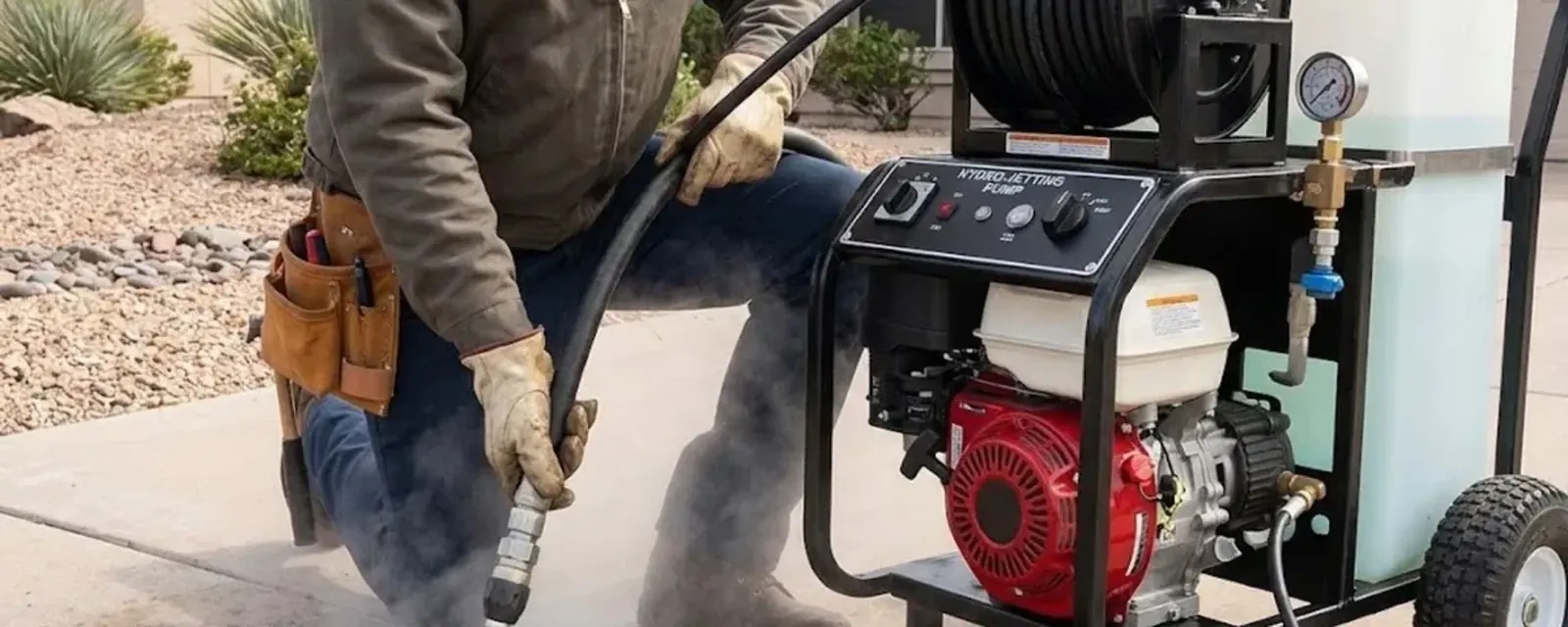
Symptoms that point to jetting, not another snaking
A cable machine drills a hole through a blockage. The hole is about as wide as the cutter head, so the pipe still carries a ring of buildup around it. Water runs again for a while, then the rim narrows and the drain slows.
That repeat pattern is the main reason people look at jetting. Others include a kitchen line that fills with grease every few months, a main drain that backs up each spring when roots wake up, and a floor drain that smells even after it flows.
A restaurant-style grease trap problem at home is rare, but a long kitchen run with a low spot can behave the same way. The cure is the same, which is scouring the whole wall instead of poking one hole in it.
How a jetting visit runs, in order
A job is not just a hose and a pump. The sequence below keeps the pipe safe and the result easy to verify.
Camera first
A push camera on a flexible rod runs through the cleanout. We look for cracks, offsets, collapsed sections and roots, because those decide whether jetting is safe.
Choose the nozzle
A rotary head with rear-facing jets pulls the hose forward and scours the wall. A flushing head with a forward jet suits soft sludge. Root-cutting heads spin a chain or blade.
Set pressure for the pipe
Residential jetters commonly run in the range of 1,500 to 4,000 psi. We start low and increase only as needed, since fragile or old pipe tolerates less.
Work back toward the cleanout
The hose is fed to the far end, then pulled back slowly while the nozzle scrubs. Debris is carried downstream and flushed out of the line.
Camera again
A second pass confirms the wall is clean and shows the pipe condition without the buildup hiding it.
That second camera pass is the quiet value of the visit. It lets you see whether the pipe is merely dirty or actually damaged.
Backed up and need it cleared fast
A line that is spilling into a bathtub or floor drain is urgent, and our 24/7 dispatch handles hydro jetting calls the same way as any other plumbing emergency. A plumber assesses the line first, because not every emergency needs a jet.
Stop water use
Turn off the dishwasher and washing machine and hold off on flushing. A jetted line still has to carry whatever you send into it.
Protect the floor
Move rugs and stored boxes away from the lowest drain. Towels near a floor drain slow the spread.
Mind the electrics
Keep away from outlets, space heaters and the furnace if the floor is wet. Wait for the plumber to judge it safe.
Note where it started
Tell dispatch which fixture backed up first, and whether other drains gurgle. That detail shortens the diagnosis.
Sometimes a plumber clears the immediate blockage with a cable and schedules jetting for the follow-up. That sequence is normal and often the cheaper one.
Jetting, cabling and lining side by side
Jetting is one option on a short ladder. This table shows where it fits and where it does not.
| Method | Best for | Pipe condition needed | Main limit |
|---|---|---|---|
| Cable machine | Fresh clogs, hair, soft blockages | Almost any pipe | Leaves a hole, not a clean wall |
| Hydro jetting | Grease, scale, root mats, repeat clogs | Intact pipe with sound joints | Can worsen cracked, offset or fragile pipe |
| Jetting with root head | Dense root intrusion at joints | Sound pipe, camera-confirmed | Roots regrow unless the joint is fixed |
| Pipe lining | Cracked or leaking joints in otherwise straight pipe | Straight run, minimal offset | Needs a clean pipe and enough diameter |
| Excavation and replacement | Collapsed, bellied or crushed pipe | Not applicable, pipe is failed | Digging, restoration and a longer job |
For lining and replacement choices, see sewer line repair. For main line clearing with a cable, sewer line cleaning covers it.
Clog keeps coming back? Call (385) 488-1892 to book a camera check and, if the pipe is sound, a full hydro jet.
Call (385) 488-1892Roots, grease and scale, and what jetting does to each
Roots seek moisture and slip into pipes through joint gaps. Jetting with a root-cutting nozzle shears them back to the pipe wall and flushes out the cuttings. It does not kill the plant or seal the entry point, which is why roots can come back within one to three years.
Grease is a different case. Cooled fat forms a waxy lining that a hot water jet melts and breaks apart, so the water carries the grease downstream instead of piling it up. The kitchen branch line often shows the most dramatic before-and-after on camera.
Scale and mineral deposits matter in Herriman, where the city reports very hard water. A jet can knock loose soft scale in a drain line, but it will not dissolve hard mineral crust stuck to cast iron. That crust is a pipe replacement conversation, not a cleaning one.
When we will not jet your line
Honest answer first. Jetting is a poor idea on pipe that is cracked, collapsed, badly offset, or made of Orangeburg, a tar-paper-and-pitch material used mid-century that softens with age. High-pressure water can open a weak spot into a hole.
We also hold off if the camera cannot pass because of a collapse, if the line has no cleanout and no safe access, or if the blockage is a solid object that the jet would only push deeper.
In those cases we recommend a cable pass, a repair, or a replacement instead. A tool that is wrong for the pipe costs more than it saves.
Why Herriman lines build up and who is responsible
Most Herriman homes connect to the Jordan Basin Improvement District sewer, which cleans its own mains roughly every 18 months and televises them about every five years. That schedule covers the district's pipe in the street. The line between your house and the main is private, and the owner pays for work on it.
That split matters for jetting. If your lateral is clogged, JBID will not clean it and you cannot send a jet into the district main. A camera and a jet run through your cleanout stay on your side of the line.
The district suggests inspecting a lateral when a home is sold, and roots are a known cause of damage. Neighborhoods like Rosecrest and Anthem have younger trees that may still be growing toward the pipe. Planting a large tree over the lateral is the kind of choice a camera inspection can help you avoid.
What hydro jetting costs and what changes it
You get a clear price before work starts. Several variables decide what that price is.
- Line length and diameterA 40 foot kitchen branch is a shorter job than a 90 foot 4 inch lateral to the street.
- AccessA good cleanout makes the job straightforward. Pulling a toilet to reach the line adds time and a reset.
- Severity of buildupLight grease takes one pass. Dense root mats or thick scale need slower passes and a different nozzle.
- Camera before and afterRecorded inspections add to the visit but protect you against jetting a damaged pipe.
- TimingAfter-hours and weekend work usually carries a different rate than a scheduled same-day appointment when available.
Jetting a worn or grease-clogged line is maintenance, and homeowner policies usually do not pay for it. A covered sudden event, such as a backup that damages finished space, may be paid under sewer backup coverage, which is often an add-on. Ask your insurer.
Want your real number? Call (385) 488-1892 and describe what keeps clogging, and dispatch will tell you what to expect.
What jetting will not fix
A jet cleans pipe. It does not repair pipe. If the camera shows a belly, a section that holds standing water, the line will collect debris again no matter how clean the wall is. If it shows a crack or an open joint, the fix is lining or a spot repair.
We also do not use jetting to settle a bigger question. A tree root that has split a clay joint needs the joint addressed, and the sewer inspection page explains how we document that.
Hydro jetting questions we hear in Herriman
Do you handle hydro jetting emergencies at night or on weekends in Herriman?
Yes, dispatch is open around the clock. In an emergency, we usually send a plumber to stop the backup first, often with a cable, and schedule a full jet afterward if the camera supports it. We do not promise arrival times. Call (385) 488-1892 and describe what is happening.
Is hydro jetting better than snaking?
It depends on the clog. For a fresh blockage, a cable is faster and cheaper. For repeat grease clogs, root mats and scale, a jet cleans the whole pipe wall instead of punching a hole. Many jobs start with a cable and finish with a jet. The drain cleaning page covers the cable side.
What pressure does a home jetter use?
Residential units commonly run between about 1,500 and 4,000 psi. The right setting depends on pipe material and age. We begin low and step up only when the camera and the debris call for it.
Can hydro jetting damage my pipes?
Yes, if the pipe is already compromised. Cracked clay, crushed Orangeburg and badly offset joints can fail under pressure. That is why we run a camera first and will recommend another approach if the pipe cannot handle it.
Will jetting get rid of tree roots permanently?
No. It cuts roots back to the wall and flushes them out, but the plant stays alive and the entry point stays open. Roots typically return in one to three years unless the joint is lined or replaced.
Do you jet the sewer main in the street?
No. The main belongs to Jordan Basin Improvement District, which cleans it on its own schedule. We jet your private line from the house to the main, working through your cleanout. If the camera points to a main problem, we document it and send you to JBID.
How long does a jetting visit take?
A typical house line takes a few hours including the pre-clean and post-clean camera passes. Long runs, heavy roots, or limited access take longer. The plumber will give you a realistic window once the first camera pass is done.
What should I do before the plumber arrives?
Clear access to the cleanout, move stored items away from the lowest floor drain, and stop using water. If you know where the line runs outside, mention it. Tell dispatch about any past root work or repairs.
Not sure if you need a jet or a cable? Call (385) 488-1892 and a plumber will help you decide.
Call (385) 488-1892Sources and standards
The standards and local rules behind this service page are listed below. Rules and fees change, so read the current version before you rely on them.