
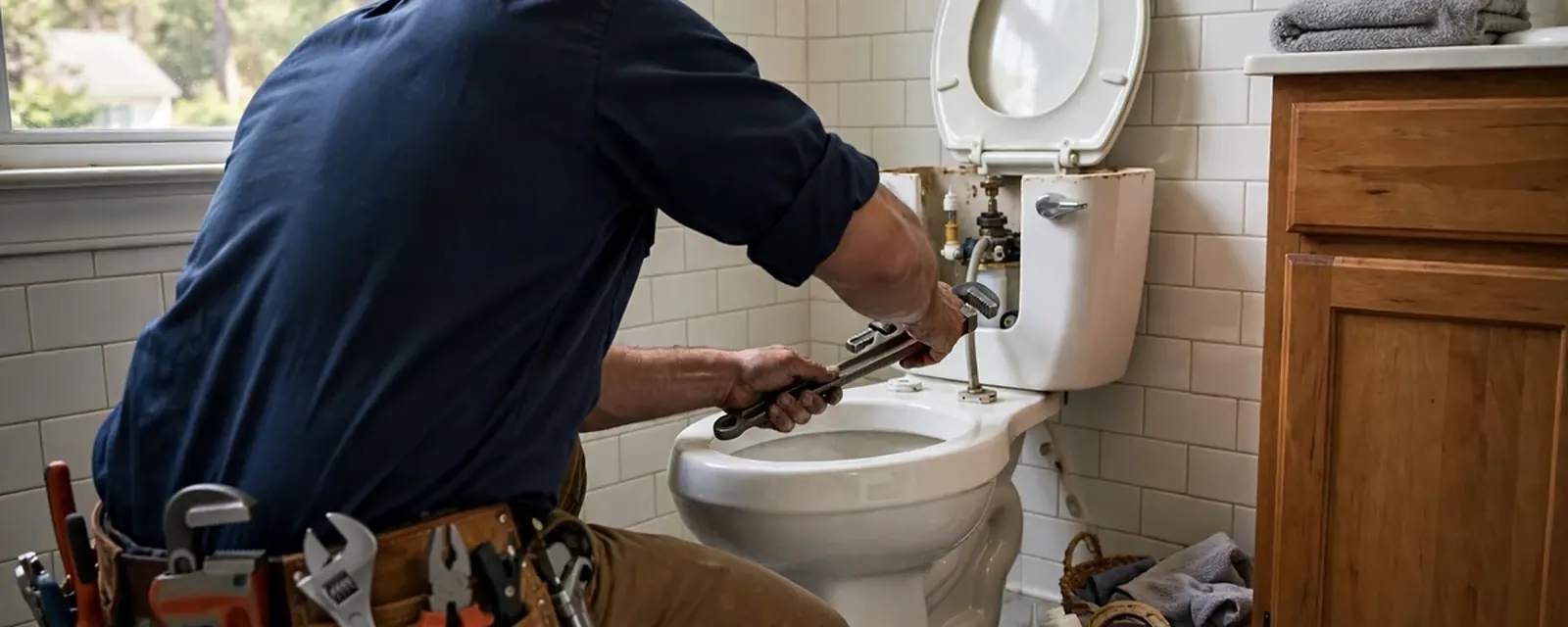
Three symptoms, three different problems
A toilet that hisses or refills on its own is usually leaking water past the flapper into the bowl. The fill valve keeps topping up the tank, and your water meter keeps turning even though nobody flushed. Dye tablets in the tank settle this in about ten minutes. If color shows up in the bowl without a flush, the flapper or its seat is the culprit.
A toilet that rocks is a different story. The bowl is no longer pinched evenly against the flange, so the wax ring loses its seal. You may see a damp ring of floor, smell sewer gas, or notice the vinyl lifting near the base.
Match the symptom to the likely part
Use this as a rough guide. A quick inspection confirms which row matches your toilet.
| What you notice | Most likely cause | Typical fix | Repair or replace? |
|---|---|---|---|
| Tank refills every few minutes | Worn flapper or flapper seat | New flapper, clean the seat | Repair |
| Hissing, tank never stops filling | Failed fill valve or float | Replace fill valve | Repair |
| Water at the base after flushing | Wax ring or loose closet bolts | Reset toilet with a new wax ring | Repair |
| Toilet rocks side to side | Uneven floor or damaged flange | Shim, tighten or repair flange | Repair |
| Hairline crack in bowl or tank | Porcelain failure | Cannot be patched safely | Replace |
| Weak flush, gurgling nearby | Clogged jets, trap or vent | Clear with an auger, check vent | Repair |
| Flange rusted or crumbling | Cast iron or plastic flange failure | Repair ring or new flange | Repair, then reset |
If two rows fit, expect the plumber to fix the cheaper cause first and test again before replacing anything.
Water on the bathroom floor right now
An overflowing toilet is a mess that gets worse by the minute, and our line is open 24/7 for exactly this. While you wait, stop the water first and keep everyone out of the wet area.
Close the toilet stop valve
Turn the oval handle behind or beside the bowl clockwise until it stops. That cuts the supply to the tank.
Lift the float or lid off the tank
If the bowl is still rising, prop up the float arm or flapper chain so the tank stops refilling.
Shut the main if the stop valve fails
Find the main shutoff where the line enters your home and turn it fully. Do not force a stuck valve.
Stay clear of outlets and floor lights
Wet floors near switches, outlets or a fan can be shock hazards. Switch off that breaker if the panel is dry and easy to reach.
Do not flush again or plunge a rising bowl
More water makes the spill larger. Wait for the plumber.
Soak up clean water with towels, but treat anything that came from the drain as contaminated and wear gloves.
Repair first, replace when the porcelain says so
Most toilets built in the last twenty years can take new internals without trouble. A fill valve and flapper kit is inexpensive, quick to fit and often brings an older toilet back to normal. We lean toward repair when the bowl is intact and the flush was good before the problem started.
Replacement makes sense for hairline cracks, a bowl that has always clogged, or an old 3.5-gallon unit that wastes water. Modern 1.28-gallon models flush well when matched to the drain. We confirm the rough-in distance from the wall to the flange bolts (commonly 12 inches) so the new bowl fits.
We do not patch cracked porcelain with epoxy. It may hold for a week and then fail under load.
Toilet overflowing or running nonstop? Call (385) 488-1892 and we will walk you through the shutoff.
Call (385) 488-1892Herriman water and your toilet's moving parts
The city says Herriman wells run 25 to 60 grains per gallon and the Jordan Valley supply 10 to 12, so tap water here is very hard. That scale builds on fill valve seats, flapper edges and rim jets. A flapper that looks fine can still leak because crust keeps it from seating.
Hardness also shifts with the season, since the city moves to its winter source in mid-October and brings wells back in spring. If a toilet starts running after that change, scale is a good first suspect. A yearly check of the fill valve and flapper is cheaper than a high water bill.
What a replacement visit looks like
A planned swap usually takes under two hours once the new toilet is on hand.
Turn off and drain
We close the stop valve, flush, and sponge the last water from the bowl and tank.
Pull the old unit
Closet bolts come off, the bowl lifts away, and the old wax is scraped from the flange.
Inspect the flange
A cracked, corroded or low flange needs a repair ring or replacement.
Set and connect
A fresh wax ring goes down, the bowl is seated evenly, and a new braided supply line is fitted.
Test
We flush several times and check for weeping at the base and stop valve.
What belongs in a Herriman toilet and what does not
Jordan Basin Improvement District asks residents to flush only human waste and toilet paper. Wipes marketed as flushable, rags and cotton swabs cause backups in the private line and in the district mains. A toilet that clogs every week is often a wipe problem, not a toilet problem.
If several drains slow together, the cause may sit past the toilet. In that case a drain cleaning visit or a sewer camera inspection is the better call.
What shapes the price of a toilet job
We give a clear price before work starts. These are the factors that move it.
- Repair or full replacementInternal parts are modest. A new bowl adds the toilet itself, labor to set it and disposal of the old one.
- Toilet model and heightElongated, comfort-height or dual-flush bowls cost more than a basic round-front unit.
- Flange or floor conditionA rotted subfloor or damaged flange adds repair work before the bowl can sit properly.
- Stop valve and supply lineOld multi-turn stops and rigid supplies are best replaced at the same visit.
- After-hours dispatchNight and weekend calls may carry a different rate than a same-day appointment when available.
Sudden overflow damage from a failed supply line is often covered by homeowner insurance, while wear and slow leaks usually are not. Ask your insurer before you file, and keep photos of the damage.
Want your real number? Call (385) 488-1892 and describe what the toilet is doing. We can usually tell you whether it sounds like a part or a replacement.
Toilet questions we hear most
Do you handle toilet emergencies at night or on weekends in Herriman?
Yes. Our dispatch line runs 24/7, and an overflow, a supply line failure or a toilet that will not stop filling counts as an emergency. We cannot promise an exact arrival time, but we give you shutoff steps over the phone and send the next available licensed plumber.
Why does my toilet run on its own?
Usually the flapper is leaking into the bowl. Hard water scale on the seat is a common reason in Herriman.
The fill valve then restarts to refill the tank. Dye in the tank will confirm it.
Can you fix a toilet that rocks without replacing it?
Often yes. We reset it on a new wax ring, shim low spots and tighten closet bolts evenly. If the flange is broken or the floor is soft, the repair needs more work first.
Do I need a permit to replace a toilet?
Repair and maintenance of existing plumbing does not require a permit per the city. Adding a brand-new toilet or new drain lines does. Permit rules vary, so ask the Herriman building department about your project.
Can you install a toilet in a new basement bathroom?
We can set the fixture, but new drain and vent lines count as added plumbing. See our plumbing installation page for how that works, including permits.
Still unsure what your toilet needs? Call (385) 488-1892 and describe the symptom.
Call (385) 488-1892Sources and standards
The standards and local rules behind this service page are listed below. Rules and fees change, so read the current version before you rely on them.