
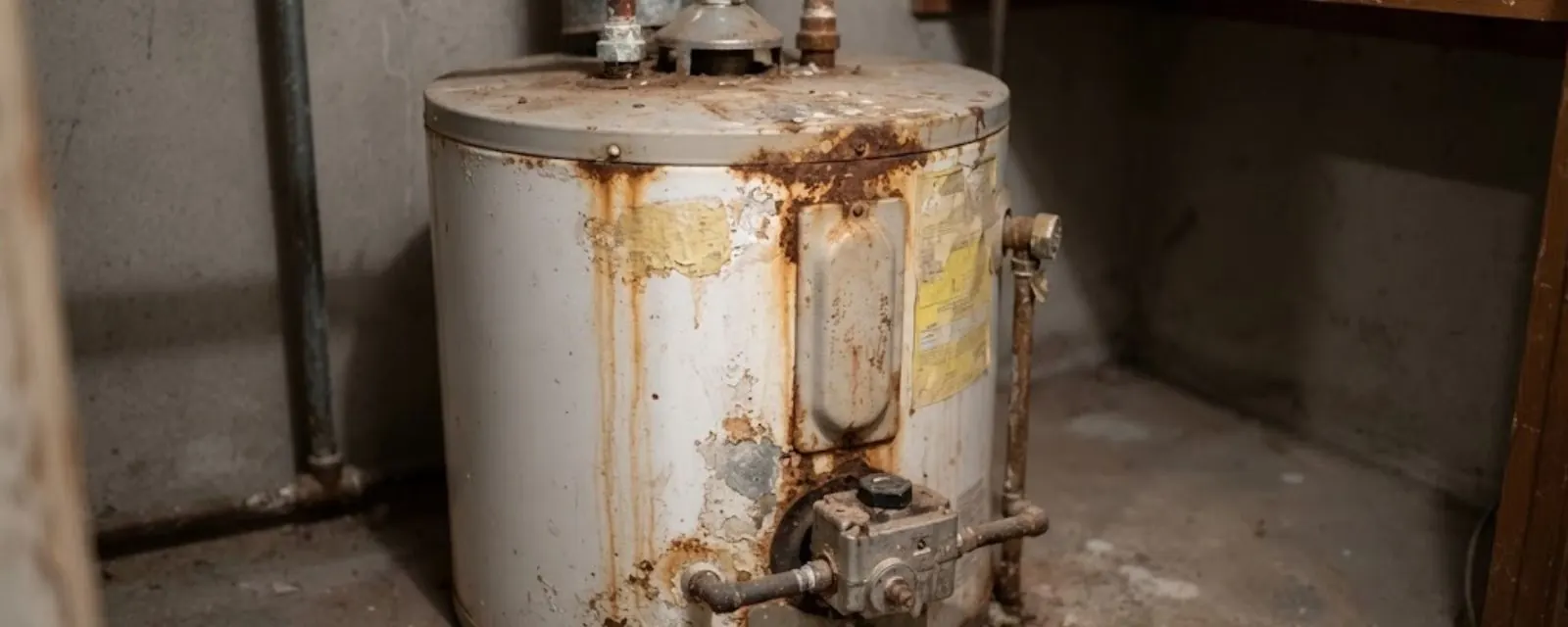
Lifespan ranges by type
| Heater type | Typical lifespan | What shortens it | What extends it |
|---|---|---|---|
| Gas or electric tank | 8 to 12 years | Scale, a spent anode rod, high water pressure | Yearly flush, anode checks, a working expansion tank |
| Tankless | 15 to 20 years | Scale in the heat exchanger | Annual descaling and a good water filter or softener |
| Heat pump (hybrid) tank | 10 to 15 years | Clogged air filter, scale | Clean the filter, flush the tank |
Manufacturer warranties often run 6 years on tanks, which is shorter than the heater's real life. Do not read the warranty as a lifespan.
Find the age of your heater
Look at the rating label on the tank. The serial number usually encodes the month and year of manufacture, such as a letter for the month and two digits for the year. Many manufacturers publish a decoder on their websites.
If the label is unreadable, count the age from the date the house or the last upgrade was finished. A heater past 10 years old that sits in a conditioned space with hard water is already on borrowed time.
The anode rod, in plain terms
Inside every steel tank water heater is a metal rod, usually magnesium or aluminum, that corrodes first so the tank steel does not. This is the anode rod. When it is used up, the tank steel starts to corrode instead, and a leak follows.
Pulling the rod every two or three years shows how much is left. Replace it when it is thin as a pencil or coated with calcium, since a fresh rod can add several years. Softened water usually eats the rod faster, so check it more often if you run a softener.
Herriman's hard water and permit rules
The city calls local water very hard. Its wells run between 25 and 60 grains per gallon, and Jordan Valley Water supply runs between 10 and 12. Water that hard deposits scale on heating elements and the tank bottom, so a heater here works harder and tends to age faster than one on soft water.
The city also moves between sources through the year. It shifts to Jordan Valley water only from mid-October and brings wells back in spring, so hardness at your tap can change. If you own a softener, re-check its settings each season, as the city advises.
Replacing or adding a water heater requires a permit from the Herriman Building Department. Tankless installations also need a gas diagram. Repair and maintenance of an existing heater does not need a permit, so flushing and anode work are fine without one.
Heater near the end of its life? Call (385) 488-1892 and talk to a licensed plumber.
Call (385) 488-1892Signs it is time to replace
Any two of these on a heater past eight years old usually point to replacement.
- Water pooling at the base of the tank, which means the tank steel itself has failed.
- Rust colored hot water, especially if the cold water is clear.
- Rumbling or popping noises from scale baking at the tank bottom.
- Hot water that runs out far sooner than it used to.
- Repeated repairs on the thermostat, element, or gas valve in a single year.
- A tank more than 12 years old that has never been flushed.
A leaking tank cannot be repaired. When that happens, turn off the water and power or gas and call quickly. A licensed plumber handles water heater replacement from there.
Repair or replace?
A heater under 8 years old with a single failed part, such as a thermostat or an element, is usually worth repairing. A heater over 10 years old with a leaking tank is not.
Tankless units are different. They are often repaired and descaled, since a flush can restore flow. If you are weighing the switch, see how tankless water heater installation compares for your home's gas line and venting.
Extend the life you have
These upkeep tasks cost little and add years.
Flush once a year
Turn off power or gas, attach a hose to the drain valve, and drain a few gallons until the water runs clear.
Check the anode rod
Every two to three years, inspect it with a 1 1/16 inch socket and replace when worn.
Test the relief valve
Lift the lever briefly once a year and confirm water flows and stops. Keep clear of the discharge.
Set the thermostat near 120 degrees
A lower setting slows scale formation and scald risk.
Planning ahead
Do not wait for a flood. Dispatch from Herriman also covers South Jordan and Bluffdale, and the same age rules apply there. Bluffdale buys all of its drinking water from Jordan Valley Water, so its hardness tracks the lower range Herriman quotes.
Deciding before the heater fails lets you pick the size and fuel on your own schedule. It also gives you time to line up the permit and, for a gas unit, the venting and gas line work.
Water heater age questions
Does Herriman's water shorten a tank water heater's life?
It can. The city describes local water as very hard, and scale buildup reduces heating efficiency and strains the tank. Flushing yearly and checking the anode rod helps offset that.
Do I need a permit to replace my water heater in Herriman?
Yes. The city requires a permit for replacing or adding a water heater, and tankless units need a gas diagram. Repair and maintenance do not need one.
Can I flush my own water heater?
Yes, in most cases. Turn off power or gas, connect a hose to the drain valve, and drain until clear. Do not do it while the burner is running.
Is a bigger tank always better?
No. Match tank size to household size and peak use. An oversize tank wastes standby heat.
How long should I expect a tankless heater to last?
General ranges are 15 to 20 years with annual descaling. Hard water makes descaling critical.
Ready to plan a replacement? Call (385) 488-1892 and compare options before the old tank fails.
Call (385) 488-1892Sources and standards
Local rules and figures in this guide come from the public sources below. Fees and codes change, so confirm the current version before you act on it.