
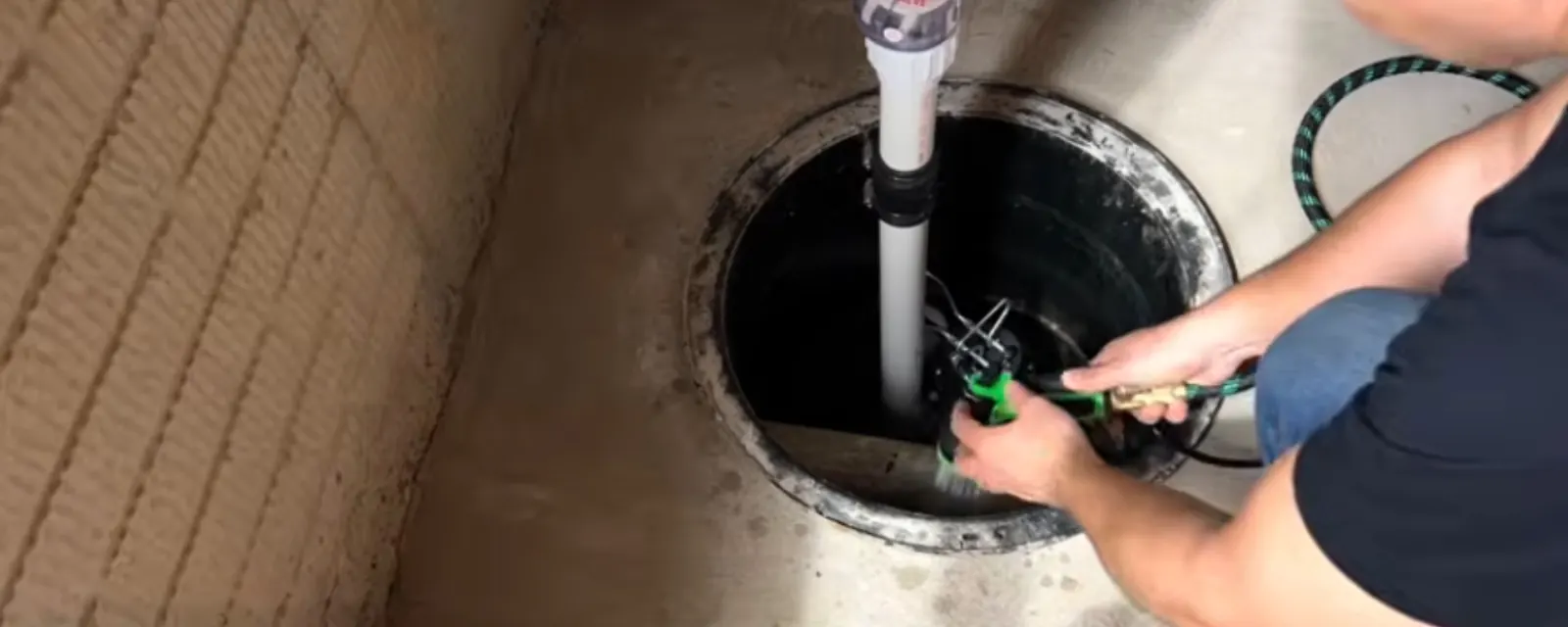
Two things people mean by an outdoor sump pump
Homeowners who search this phrase want one of two setups. The first is a pit in the basement or crawlspace whose discharge pipe runs outdoors. The second is a basin in a low spot of the yard, a window well or a walkout stairwell.
The indoor pit is far more common because it collects water at the footing drain, where seepage begins. An exterior basin makes sense only when surface water pools at one low point, such as a stairwell that fills during a downpour.
This guide covers the indoor pit with an outdoor discharge, the version most basements need. A sump pump installation and repair visit starts with finding where the water enters.
Pit, pump and check valve in install order
Plan on a full day for a first attempt, plus cure time for the concrete patch.
Locate and cut the pit
Pick the wettest corner, often where a footing drain stub or damp slab edge shows. Mark an 18 inch circle, cut the slab with a rented saw or breaker, and dig about 24 inches deep. Wear a dust mask.
Set the basin
Spread 2 to 3 inches of washed gravel, drop in a 15 to 18 inch plastic basin and backfill around it with gravel. Set the rim flush with the slab and patch the gap with concrete.
Choose and place the pump
A submersible pump near one third horsepower handles most homes. Stand it on a paver and check that the float swings freely.
Build the discharge riser
Use 1.5 inch schedule 40 PVC with glued joints. Rise straight from the pump, then add a union above the check valve so the pump can be pulled later without cutting pipe.
Install the check valve
The valve keeps water in the pipe from falling back into the pit and cycling the pump. Point the arrow outward and follow the label for orientation. Drill a 3/16 inch relief hole in the riser below the valve so air cannot lock the pump.
Run the line outdoors
Pass through the rim joist with a sleeve, seal it with exterior caulk and slope the pipe toward the outlet. Test by pouring five gallons into the basin.
Plug the pump into a dedicated GFCI outlet. Adding a new circuit or hardwiring is electrician work.
Discharge choices compared
A sump pump moves groundwater, so the end of the pipe matters as much as the pit. This table lists the usual choices.
| Where the pipe ends | Works when | Main risk | Confirm first |
|---|---|---|---|
| Open end on your own lot, ground sloping away | The lot falls away from the house and neighbors | Winter icing and water soaking back to the footing | Grading and property lines |
| Buried line to a pop-up emitter in the yard | You have room for a long, downhill run | Freezing in shallow pipe and a crushed or clogged emitter | 811 locates, burial depth, and whether a permit applies |
| Street gutter or storm drain | Only if the city confirms it | Illegal discharge penalties and sheet ice on the road | City stormwater staff, before any connection |
| Sewer cleanout or house drain | Never for groundwater | Overloads the sewer and can back up the street | JBID says no groundwater belongs in sewer lines |
No row here is a legal ruling. Discharge rules are local, and the Herriman pages reviewed for this guide do not state one for sump pumps. Ask the building department where discharge is allowed before you pick a point.
Want the pit set and tested the same day? Call (385) 488-1892 to ask about sump pump work in Herriman.
Call (385) 488-1892What Herriman's own pages say about your discharge line
Herriman's stormwater program uses the slogan Only rain down the drain, and the city amended its storm sewer ordinance in April 2021 to prohibit non-stormwater discharges into the storm system. That system runs to creeks and rivers with no treatment. Do not aim a sump line at a curb inlet on the assumption that it is fine.
Jordan Basin Improvement District runs sewer for Herriman and says no groundwater is permitted in sewer lines or trenches. A sump pump tied to a floor drain or cleanout breaks that rule, so keep the discharge pipe separate from every drain in the house.
The city's grading page says ground must fall at least 6 inches in the first 10 feet away from the foundation. Land your outlet beyond that 10 foot band, or the water soaks back toward the footing.
The city also says adding new plumbing lines to a home needs a permit, while repair of existing plumbing does not. Whether a brand new pit and discharge line counts is a question for the building department at 801-446-5327, so ask before you cut concrete.
Call 811 before any digging outside. Blue Stakes advises at least three business days of notice, and inside the 24 inch zone around marked lines only hand tools are allowed. Private lines such as sprinkler pipes are not marked, so probe by hand.
The Utah Geological Survey maps shallow groundwater in north Herriman only. If you live there, expect the pit to run often. Elsewhere, a dry pit still pays off in a microburst, which the city names as the usual cause of local flooding.
Freeze, ice and the last ten feet of pipe
Short exposed runs freeze solid at the outlet in a cold snap. A line that drains completely after each cycle avoids the problem, while a flat run that holds water does not.
If you bury the line, bury it below the frost line. Herriman's deck page requires 30 inch post footings but does not call that a frost depth, so ask the building department what applies to pipe.
Lot size changes the plan. On the one acre lots common west of Redwood Road in Bluffdale, a run may be long enough to need a buried line. Riverton and Bluffdale both publish a 30 inch footing frost depth, which is a footing number and not a pipe rule.
Details that keep a new pit from causing problems
These small items decide whether the installation still works in year five.
- Use a sealed, gasketed lid. The state geological survey notes that radon enters through foundation cracks and utility openings, and the state environmental agency says one in three Utah homes has high radon.
- Add a battery backup if the pit runs often. A pump fails when the power does, and storms cause both.
Honest limits
A plumber can set the pit, pump, check valve and discharge pipe, but does not repair cracked foundations, regrade yards or run new circuits. If water enters through a wall crack or the soil slopes toward the house, a pump only treats the symptom, and basement waterproofing or regrading may be the real fix.
Questions homeowners ask
Do I need a check valve on a sump pump discharge line?
Yes. Without one, each cycle ends with the pipe's full load of water draining back into the pit, which restarts the pump and wears the motor. Fit the valve above the pump with a union.
How deep should the sump pit be?
About 24 inches is typical, with a 15 to 18 inch basin on a gravel bed. Set it lower than the footing drain it serves.
Does a sump pump need its own outlet?
A dedicated GFCI-protected outlet is safest, since a shared circuit can trip and leave the pit unprotected.
Can I run my sump pump discharge to the street in Herriman?
The city pages reviewed for this guide state no sump pump discharge rule, so there is no safe yes. Herriman bans non-stormwater discharges to its storm system and the sewer district bars groundwater from sewer lines. Ask the building department at 801-446-5327 where discharge is allowed on your lot.
How long does a sump pump last?
Plan on roughly seven to ten years for a pump that runs often. Test it twice a year, since an idle pump can still seize.
Not sure where your pit and discharge line should go? Call (385) 488-1892 and a licensed plumber can walk the options with you, or read about sump pump installation and repair.
Call (385) 488-1892Sources and standards
Local rules and figures in this guide come from the public sources below. Fees and codes change, so confirm the current version before you act on it.