
Is it the valve or the system?
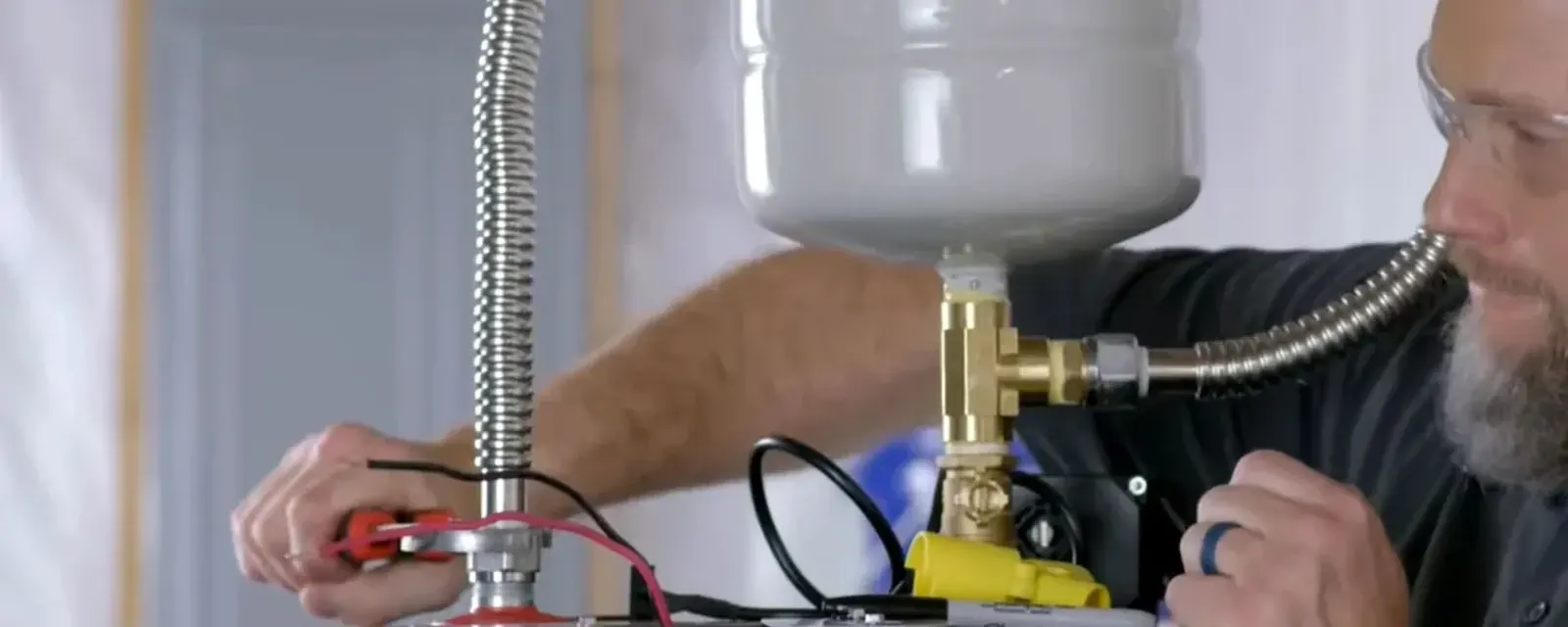
Match what you see to the likely cause before buying parts. A new valve fixes the first kind of problem and only hides the second.
| What you see | Likely cause | Will a new valve help? | Better next step |
|---|---|---|---|
| Slow drip only while the burner or element runs | Thermal expansion pushing pressure past the valve setting | Rarely | Read pressure at a hose bib and check the expansion tank |
| Constant drip all day, even when the tank is idle | Worn or scale-coated valve seat | Yes | Replace the valve and watch the discharge pipe for a day |
| Hissing, steam or very hot discharge | Thermostat or burner control failure overheating the water | No | Shut off power or gas and call a plumber |
| Crusty buildup on the stem or body | Mineral deposits or corrosion on an aging valve | Yes | Replace now, before the test lever seizes |
| Water pooling at the base of the tank | Failed tank or a loose fitting | No | Check fittings, then plan a replacement |
Safety before the wrench
The tank holds water hot enough to scald, and the valve sits in the hottest layer at the top. Let the heater cool for an hour with the power or gas off, and wear gloves and closed shoes.
Electric models need the breaker off at the panel. Gas models need the gas control set to off, and a gas smell means you stop, leave the house and call 911 and Enbridge Gas at 1-800-767-1689 from outside. Never lift the test lever while the discharge pipe is missing, because it will spray scalding water.
Replacement, step by step
Gather a pipe wrench, a garden hose, PTFE tape or pipe dope, and a replacement valve before you start.
Cut power or gas
Switch off the breaker or turn the gas control to off. Confirm with a tester or by checking that the pilot or igniter is dead.
Close the cold inlet and open a hot tap
Shut the cold supply valve above the heater and open a hot faucet upstairs. The open tap lets air in so the tank drains.
Drain below the valve
Hook a hose to the drain valve and drain until the level sits clearly below the valve opening. For a valve near the top that is a few gallons, and more if the valve sits on the side.
Remove the discharge pipe and old valve
Unscrew the pipe, then turn the old valve out with a pipe wrench. Match the thread (usually 3/4 inch), the pressure rating (commonly 150 psi) and the BTU capacity on the tank label.
Thread in the new valve
Wrap the threads with three or four turns of tape, start the valve by hand and snug it with the wrench. Do not overtighten, since the brass body can crack. The probe must reach into the upper water.
Reconnect the discharge pipe
Match the valve outlet size and run the pipe downhill with no trap, no valve, no cap and no threaded end. Finish a few inches above a floor drain or outdoors where a leak is visible. Use copper or CPVC rated for hot water, not standard white PVC.
Refill and restore
Close the drain, open the cold inlet and leave the hot tap running until water flows steadily with no spitting. Only then restore power or gas, because electric elements burn out in minutes when dry. Check every joint for drips.
Valve leaking, hissing or stuck? Call (385) 488-1892 and a licensed plumber can diagnose it, or see water heater repair in Herriman.
Call (385) 488-1892Herriman permit, water and pressure facts that apply here
Herriman's building page says repair and maintenance of existing plumbing do not need a permit, while replacing or adding a water heater does. A relief valve swap is repair. If the job turns into a new heater, the permit and an inspection apply, so call the building department at 801-446-5327 if you are unsure which side your job is on.
The city describes its water as very hard, with local wells at 25 to 60 grains per gallon and Jordan Valley Water Conservancy District supply at 10 to 12. The supply shifts toward the lower-hardness source from mid-October and back toward wells in spring. Scale collects on a valve's spring and seat, so lift the test lever every few months to keep deposits from cementing it shut.
Herriman's 2024 water master plan sets 60 to 120 psi as the desired operating pressure and 150 psi as the system maximum. Those are city design targets, not a promise at every tap. A typical relief valve opens at 150 psi, so a home near the high end has little margin once expansion adds pressure. Thread a simple gauge onto a hose bib and read it when demand is low.
If the gauge reads above 80 psi, ask about a pressure-reducing valve and a thermal expansion tank. Herriman enforces the 2024 International Plumbing Code, which governs how the discharge pipe is routed.
Neighboring cities, same valve
The same hardness and pressure questions come up across the south valley. South Jordan states its hardness at 7 to 10 grains per gallon, which is gentler than Herriman's well water but still enough to coat a valve seat.
West Jordan publishes a design policy with normal pressure of at least 50 psi and a maximum of 110 psi, and says that above 80 psi the plumbing code requires a regulator on the customer side of the meter. That is a useful benchmark for your own gauge.
Stop and call a plumber when
A homeowner can swap a valve. These situations are not a valve problem.
- The discharge pipe spits steam, or water from it is too hot to touch at the tank.
- The old valve will not turn out, or the tank fitting threads look stripped.
- The tank rumbles, rusts at the seams or leaks from the shell, which points to water heater replacement.
- The valve drips again within days after a new one went in, which suggests pressure or a failing thermostat that water heater repair can trace.
- You smell gas at any point. Leave the house first and phone second.
What never to do
Do not plug a weeping valve, add a cap, run the pipe uphill or fit a higher rated valve to stop a drip. A working relief valve is supposed to open, and the only safe fix is removing the heat or pressure causing it.
Questions homeowners ask
Do I need a Herriman permit to replace just the relief valve?
Based on the city's building page, no. Herriman states that repair and maintenance of existing plumbing do not require a permit, while replacing or adding a water heater does. If you decide to replace the heater itself, the permit and inspection apply, so confirm with the building department.
How do I know which valve rating to buy?
Read the label on the tank. It lists the maximum working pressure and the BTU per hour capacity. Buy a valve with a pressure setting at or below the tank rating, and a capacity equal to or greater than the heater's input.
Why does my valve drip even though it is new?
A closed plumbing system traps the expansion of heated water, and pressure climbs until the valve opens. Check house pressure and the expansion tank before blaming the part. A drip only during heating is the classic sign.
How often should I test the valve?
Lift the lever briefly about twice a year, with the discharge pipe in place and a drain ready. If nothing flows, or the lever stays stuck, replace the valve.
When is a new valve a waste of money?
If the tank is leaking, very old or showing rust streaks near the base, a new valve only postpones the real problem. Ask for a plumber's opinion on whether a repair is worth it.
Dripping valve and not sure why? Call (385) 488-1892 for a licensed plumber, or read about water heater repair and replacement.
Call (385) 488-1892Sources and standards
Local rules and figures in this guide come from the public sources below. Fees and codes change, so confirm the current version before you act on it.