
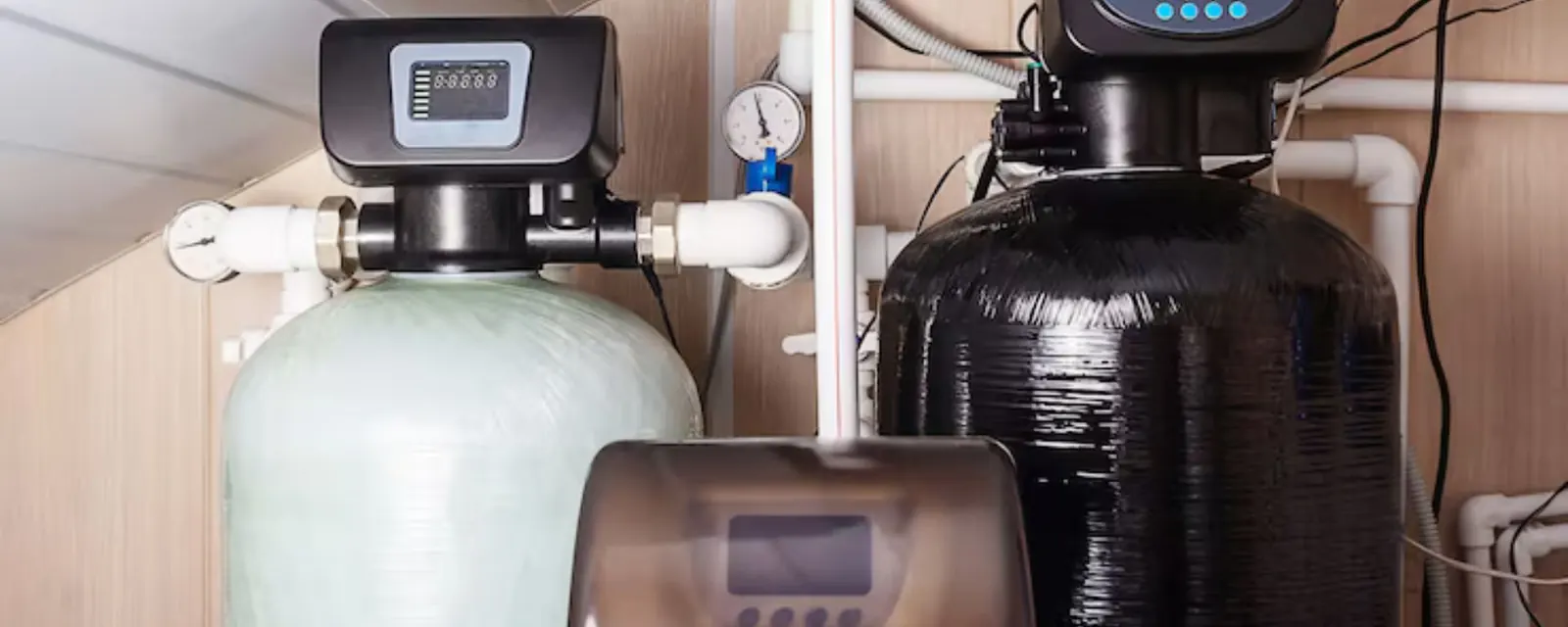
Where the water is coming from
| Where it drips | Likely cause | DIY or call |
|---|---|---|
| Seam between the housing and the cap | Dry, flattened or twisted O-ring | DIY, replace the O-ring |
| Bottom of the clear or blue sump | Hairline crack from overtightening or pressure | DIY if the same model is stocked |
| Inlet or outlet threads | Failed thread tape or cracked plastic fitting | Call if the pipe is copper or stiff |
| Pressure relief button on top | Stuck button or seal | DIY, reseat the button |
| Wet only on cool, humid days | Condensation, not a leak | Wipe and watch |
| Brine tank or drain hose of a softener | Not a filter, see the softener section | Call if the valve head leaks |
Dry the housing completely and wrap a dry paper towel around it for an hour. The spot that gets wet first is the real leak.
Changing a cartridge without creating a new leak
Most filter leaks start right after a cartridge change, so the order of operations matters.
Close the supply
Shut the valve ahead of the filter, or the home's main valve if there is no bypass. Open a downstream faucet to drop the pressure.
Press the relief button
Most whole-house housings have a red pressure relief button on top. Press it until air hisses and the water stops.
Unscrew with the housing wrench
Use the plastic wrench that came with the unit and keep a bucket under the sump. It will be heavier than you expect.
Inspect and lubricate the O-ring
Wipe the groove clean. Coat the ring with food-grade silicone grease. Never use petroleum jelly, since it swells rubber.
Seat and tighten by hand
Drop the new cartridge in straight, thread the sump on without crossing, and snug it by hand plus a slight turn of the wrench. Open the supply slowly and check the seam for weeping.
If the sump still weeps after a fresh O-ring, the housing itself is cracked or the threads are damaged and the whole housing needs replacing.
High pressure and clogged cartridges
A cartridge packed with sediment restricts flow, and the pressure upstream of it climbs. Over time that stress finds the weakest seal. Change cartridges on the manufacturer's schedule, and sooner if the faucets downstream lose pressure.
Line pressure matters as well. The city's water master plan targets 60 to 120 psi at the tap, with up to 150 psi as the maximum system pressure, so a house in a high-pressure zone can see numbers well above what plastic housings are rated for. Put a cheap gauge on a hose bib to check, and ask a plumber about a pressure regulator if the reading is high.
Housing cracked or the pipe behind it is wet? Call (385) 488-1892 and ask for a diagnosis with the price explained first. Ask about softener options at the same visit.
Call (385) 488-1892Filter versus softener, they leak differently
A filter removes particles, taste or chlorine and never changes hardness. A softener swaps calcium and magnesium for sodium using a resin bed and salt brine, and has its own leak points such as the brine line, the drain hose and the control valve.
If you have both, trace the drip back to the right device before replacing parts. Planning a new unit? Read about water softener installation first.
Hard water and secondary water in Herriman
Herriman City describes local water as very hard, with its wells usually reading 25 to 60 grains per gallon and Jordan Valley Water Conservancy District supply at 10 to 12. The city notes that Utah ranks high for hard water and that the mineral deposits show up on dishes, shower doors and appliances. In practice that scale also builds on filter inlet screens and threads, which is one reason a filter housing can seize and then crack when forced.
Another city fact is easy to overlook. Secondary water in Herriman is untreated and not for drinking, and it runs only in some areas from May 1 to mid October. The city filters it to 200 microns and recommends a second filter on the homeowner side. If you run a filter on a sprinkler or irrigation line, never connect that same filter to a drinking-water tap or fridge.
The city also suggests residents may use water softeners or sink and shower filters, and to check softener settings when the water source changes seasonally. The switch to the winter source starts in mid October, so a reset of hardness settings now makes sense.
Under-sink and drinking-water filters
Smaller systems leak in different places. A reverse osmosis unit under the kitchen sink has push-fit tubing, a tank valve and a small faucet, and the most common drip is a tube that was not pushed in all the way or has a nicked end. Pull the tube out, cut it square with a sharp blade, and press it in until it seats past the collar.
Compression fittings on the cold supply can weep when the nut has loosened after vibration. Tighten a quarter turn at a time, since overtightening splits the plastic ferrule. A drip that stays wet after that needs a new fitting, not more force.
Before you replace the whole system
Replacing a cartridge or O-ring counts as maintenance, and the city says repair and maintenance of existing plumbing does not need a permit. Adding new plumbing lines for a new unit is different, and does need one.
If the leak has soaked a wall or the floor under the system, the water has probably traveled. A plumber with moisture tools and leak detection can find where it went. Nearby cities see the same issue. Bluffdale buys all its drinking water from JVWCD, while West Jordan draws about 93 percent of supply from JVWCD, so the same wholesale hardness reaches filters all across the south valley.
Filter leak questions from Herriman homes
How often should a whole-house filter cartridge be changed?
Follow the manufacturer's range, and change sooner if the faucets downstream lose pressure or the cartridge looks dark. Sediment loading differs from house to house.
Is a dripping filter housing an emergency?
A slow drip can wait for a bucket and a cartridge swap, but a spraying or bulging housing needs the supply closed immediately. Shut the valve, then call.
Can I use my secondary water for drinking if I filter it?
No. The city says secondary water is untreated and is not for human consumption, and a household filter does not make it safe to drink.
Does a water softener replace a filter?
No. A softener handles hardness, while a filter handles particles, taste or chlorine. Many homes run one of each.
Should I reset my filter or softener when Herriman changes its water source?
The city says to check softener settings seasonally, and its winter source starts in mid October. A filter has no setting to change, but it is a good moment to swap the cartridge and inspect the O-ring.
Not sure whose leak it is, the filter's or the pipe's? Call (385) 488-1892 and we will sort it out.
Call (385) 488-1892Sources and standards
Local rules and figures in this guide come from the public sources below. Fees and codes change, so confirm the current version before you act on it.